1.d Perfect Face

1d. Prototype

Set in the year 2040 in China, our scenario is a dystopic future where perfection is the ultimate goal. Genetic modification and CRISPR technology has advanced and we are now able to genetically engineer our future children. This has allowed parents to provide genetic perfection as they are able to pick and choose the characteristics of their child. Even now in the  21stcentury athletes have already been abusing science to boost their performance with “performance-enhancing drugs that were originally meant to treat people with disease”(Simmons 2008). As science progresses, more and more people will be interested in enhancing their physical appearance and abilities as it will be made accessible to those who can afford it.

This is a superficial future of excess and self-obsession and everyone strives for physical perfection. Following on from the group scenario and our concept of the perfect baby corporation – I wanted to create a product that would help people who weren’t genetically blessed at birth to also reach these high standards of beauty.

click here for design process:   initial designs and brainstorms

Screen Shot 2018-10-19 at 3.18.11 PMScreen Shot 2018-10-19 at 3.18.23 PM

My prototype is a play on the television infomercials we are already exposed to for questionable health and beauty products. Having recently bought a back brace, I wanted to push this idea of a product used for correction not just of physical incapacities but that can correct physical appearances. In this future, with such a prominence on the way people look, this product will be successful as it is an alternative to plastic surgery, as China already has the third-largest market for cosmetic surgery. This dystopic conception creates major social inequality between those who can afford and those who can’t which further divides the classes. This product will be attractive to those in the latter category who want to compete with the elite class but do not have the means to have surgery.

IMG_3607

presenting Perfect Face in class

My prototype – The perfect face – is essentially a face stretching brace that people can wear at home to lift and tighten their face. It has a double chin reducing strap, a cheek lifting strap and a frown line reducing strap to tighten all the right places and leave the customers with radiant and youthful. Customers can choose to wear all the straps or just target their ‘problem area’ with one strap. Coated with 24k gold – because we are in a future of excess – it also has anti-bacterial properties that helps reduce wrinkles, stimulates the skin cells and can even lighten your complexion. I also designed an advertisement for the Perfect Face as well as its packaging making it a realistic and commercial product for our dystopic, superficial future scenario.

Click here for advertising:  Perfect Face – A commercial product

 Reference:

 Simmons, D. 2008, ‘Genetic inequality: human genetic engineering’,Nature Education,vol. 1, no. 1

Perfect Face – A commercial product

I created the advertising camapin as well as the packaging to go along with my prototype to make it more commercial to fit within our superficial future scenario.

Marketing advertisement that could be used in magazines or on public transport.

Screen Shot 2018-10-19 at 3.18.37 PM

Box net I designed for the Perfect face packaging Screen Shot 2018-10-19 at 3.18.51 PM

1.c. Interview with Sandra Le

1c. Primary Research

Interview with Sandra Le

Today I sit down with Sandra Le a skin specialist at Mecca to discuss the rising beauty standards and the extremes lengths women (in particular) are willing to go for “ultimate beauty and perfection”. Sandra has been working at Mecca for two years and has been interested in makeup and beauty trends from a young age.

There has been a drastic change in beauty standards due to the saturation of social media imagery. The role social media plays is crucial in this industry as we are constantly exposed to images of beautiful people (natural or unnatural) leading to issues with body positivity and insecurity. Psychological research into plastic surgery has exposed that social media users now prefer photos of themselves (and ‘selfies’) rather than their “true image”(Gohritz et al. 2016). Beauty ideals have become more obvious as Sandra explains, “social media influencers and beauty gurus really impact on what today’s beauty standards are. They follow or make trends and influence their subscribers and followers” which ultimately impacts what society believes the beauty standard is.

At the frontier of this Instagram beauty sensation is the Kardashian family. Speculations surrounding their transformations as unnatural have not stopped people trying to achieve their naturally unattainable features. Sandra believes they’ve had a revolutionary impact on the world’s idea of beauty especially in regards to makeup and face and body modifications – even to the extreme of plastic surgery. The Kardashians travel the world giving makeup tutorials with their personal makeup artists, which has influenced others as Sandra points out, “a lot of the beauty gurus now get asked to recreate the Kardashians makeup looks, because so many people want to look like them”. Now, both Kim Kardashian and Kylie Jenner have their own multi-million dollar makeup brands so that others too can ‘achieve’ their look.

lips.jpg
Kylie Lip Kit Fails

Image source: http://www.splinternews.com

In 2015, the Kylie Jennerlip kit challenge came out as a YouTube sensation where people would suck on a glass cup to try emulate the starlets plump pout resulting only in swollen lips. Kylie has led a change in the beauty industry and Sandra agrees “I think Kyle Jenner really changed both men and women’s views on lips, more people now want larger and plumped lips even going to extreme lengths like the lip kit challenge”The lengths people will go to these days to attain their ‘ideal’ beauty is dangerous and concerning as doctors warned against the body modification dare as it could lead to severe pain, swelling and bruising. Furthermore, doctors suggest using lipliner as an alternative to surgery which young people are far too quick to rush into these days with  twenty one year old Kylie Jenner as their role model. According to Sandra, there are new beauty products available now like the “Too Faced lip injection – which is a lip-gloss that you apply and it actually helps lips to look plump and full”.

Not only have makeup trends become more extreme, cosmetic surgery has now become a societal norm. Asia has the fastest-growing market for cosmetic surgery performing 23.6 million face and body cosmetic surgeries in 2016 with the most popular modifications being nose jobs, chin implants, facelifts and eyelid lifts (The Times of India, 2015). Beauty trends reach new extremes in Asia, with products and surgeries for eyelid lifting, face stretching and skin whitening, people are going to severe lengths to be “beautiful”. Sandra has told me of many strange customer experiences, even having customers asking for foundation 2-5 shades lighter than their natural skin tone. She says, “these customers are from different backgrounds mainly from Asia, who are between 35-65 years old, I think the reason why they prefer to look lighter because in their culture it’s a sign of royalty, money and beauty”. These measures have become so extreme and people now feel peer-pressured to conform to the beauty standards. There is nothing too dangerous for a face of ultimate perfection.

further research: Looking at cosmetic surgery in Asia

References:

Gohtritz, A., Haug, M., Oranges, C.M., Schaefer D.J. & Schaefer K.M. 2016, ‘The mirror effect on social media self-perceived beauty and its implications for cosmetic surgery’, International Open Access Journal of the American Society of Plastic Surgeons, vol. 4, no. 11

The Times of India 2015, ‘Rise in cosmetic surgeries linked to social media’, The Times of India,29 December, accessed 12 October 2018, <http://go.galegroup.com.ezproxy.lib.uts.edu.au/ps/i.do?id=GALE%7CA438589116&v=2.1&u=uts&it=r&p=ITOF&sw=w>

UWIRE 2017, ‘Ideals of self-image and celebrities’ toxic influences’, UWIRE, 14 March, accessed 12 October 2018, <http://uwire.com/?s=UWIRE+Text&x=26&y=14&=Go&gt;

1. b. More Human Than Human

1.b. Positioning

This subject has exposed us to a range of views and insights into what the future could hold. Originally when thinking about the future, what comes to mind is the Hollywood high-tech version with flying cars and robots. What we have learnt about futuring is that all these prophecies will have further implications. In Cameron’s lecture, he discussed the idea of flying cars. He then prompted us to think about the repercussions of this. Will there be roads? Will there be drivers? Will there even be traffic? This idea is something I had never previously thought about in relation to futuring. What will be the effects of this technological revolution and how will this change the world we live in?

One huge technological advancement that the future holds is genetic modification. Already, there has been scientific breakthroughs in this field but it’s possible now that one day that humans will be born in science laboratories rather than hospitals.  Ridley Scott’s 1982 film Bladerunnertoys with this idea of human vs non-human in the representation of the replicants. He presents the dichotomy between natural born humans and the replicants born from science – who are created stronger and smarter –  through the films story line and the huge divide its created. The replicants are a threat to human society and are being retired by the ‘bladerunners’. Scott’s film suggests that only real humans can feel emotion not replicants.  The contradiction is revealed when Pris (a replicant) meets her creator J.F. Sebastian in her response “I think, therefore I am”.Do robots have emotion? Or, can they learn how to feel?

pris.jpg

“Roy: We’re not computers Sebastian, we’re physical”

See for yourself: Key scenes from Bladerunner

In the movie, god is replaced by the corporation – Tyrell, created by Eldon Tyrell who has been declared the god of biomechanics. Tyrell has taken on the role of god in his creation of own super-human race. Although this dystopic view of the feud between humanity vs the artificially created androids seems like pure fiction, genetic engineering of humans could lead to a similar divide. Through Cameron’s framework of futuring, it’s important to consider the repercussions of all these revolutionary scientific advancements. Bladerunner has prompted me to think that there will be a divide between natural born humans and genetically engineered humans.

If genetic engineering will allow parents choose all the features of their child including their intelligence and athletic capability, how will natural humans compete? Furthermore, not everyone will be able to afford the luxury of gifting their child a high IQ and Olympic abilities. There will be an obvious gap between those who can afford and can’t afford this luxury which will lead to a class divide. Only the elite will be have access to genetic engineering. Only the elite will now get all the best jobs, live in the best areas and offer the best life for their offsprings. These are the ideas that informed our scenario. Genetic modification is not only a possibility but it is quickly becoming our reality.

References:

Boissoneault, L. 2017, Are Blade Runner’ replicants “human”?,Smithsonian, Washington, viewed 4 October 2018, <https://www.smithsonianmag.com/arts-culture/are-blade-runners-replicants-human-descartes-and-locke-have-some-thoughts-180965097/?&gt;

Gramstad, T. 2017, Humans & technology: What separates them?, Blade Runner Insight, viewed 4 October 2018, <https://br-insight.com/library/humans-and-technology/index.html>


1. a. An Uncertain Future

1.a. Literature Review

The practice of futuring is purely speculative. Theorists examine the past and try understand the present to make predictions about future possibilities. Time is crucial in the debate of futures, as time and the human body are inextricably linked – with humankinds natural expiration date signalling the end of their past, present and future (Fry, 2009 p. 146). Despite being uncertain, there are factors to suggest that the future will be dystopic and could hold catastrophic consequences. Practitioners grapple with the vague concept of the future in an attempt to understand — and perhaps even plan — for these impending and potentially threatening scenarios. What is clear is that there are an infinite number of possible futures, all of which result from our choices today and the decisions of past generations. Unfortunately, while we are able to forecast about the future, it is often impossible to change.

Futurists, therefore, are designing in a race against the clock. Although the problems are not always clear or easily defined (Inyatallah 2008, p. 6), by attempting to develop a range of solutions, practitioners can take promising steps towards preparing for the unknown. But the question still remains — how do we design for these futures?

While futuring as a practice is an effective method for prophesising about future problems, it is only speculation — there are no definite answers. This is where research is crucial in creating a possible future. Fry’s method of creating future scenarios builds upon extensive research and uses the present as a driving factor for discovering future possibilities (Fry 2009). Fry’s design thinking has two main propositions. One being that the ‘impact events’ within the present have a direct and lasting effect on the future (Fry 2009, p. 148). The other being that these future scenarios must be relational. That is, a consideration of all the effected spheres – social, technological, economic, environmental and political –  must be taken into account. Without this consideration, the future becomes threatening. Therefore, we must seek to recognise major issues before they become uncontrollable. This way we can ensure that discovery of new potentials and opportunities can be realised (Inyatallah 2008, p. 8). These methods help designers discover the crucial information used to design for the future.

Using this method of forecasting, scientists have been planning for a future world where genetic modification (GM) is the norm. For biotechnologist Jaime Metzl, GM is not only a possibility but a future reality. As humans are progressing, so too is our evolutionary process (Ivy Magazine 2017). The technology for GM is already being used by scientists today. Metzl predicts we are close to being able to take control of science to change our future. This development raises grave ethical concerns as humans take the future into their own hands. As Metzl warns, “just because we can do something, doesn’t mean we should do something” (Ivy Magazine 2017). This technology has the potential to create generations of ‘designer babies’, further echoing the ethical repercussions of taking nature into our own hands. In a world of designer babies, parents are no longer guardians but rather act as gardeners picking and pruning their children to ultimate perfection (Green 2007). This scientific breakthrough in human germline modification has been criticized for surpassing divine and biological limits. As natural reproduction is replaced with artificial engineering, futurists predict apocalyptic consequences like the downfall of political democracy (Macintosh 2018) and an expanding gap between manufactured and natural humans.

Click here for inital research into genetic modification:

 Is Genetic Modification the Future?

GM breakthrough

References:

Fry, T. 2009, ‘Design futuring: sustainability, ethics and new practices’, Methods of Change 2 Designing in Time’ in Design Futuring, Oxford, pp. 145-155

Green, R.M. 2007, Babies by design, Yale University Press, New Haven

Inyatullah, S. 2008, ‘Six pillars: futures thinking for transforming’,Foresight, vol.10, no. 1, pp. 4-21

Ivy magazine, 2017, Genetic engineering the future of humankind, Ivy Magazine, 1 March,  accessed 12 October 2018, <http://magazine.ivy.com/2017/03/genetic-engineering-jamie-metzl/&gt;

Macintosh, K.L. 2018, Enhanced beings, Cambridge University Press, Cambridge

Looking at cosmetic surgery in Asia

Our research into Asian aesthetic surgery has led us to speculate our future scenario in China. Growing beauty standards in this region have created a dissolution with self-image and have encouraged young women to try dangerous beauty enhancements to achieve these unrealistic ideals

  • According to an ISAPS report on the year 2016, the latest period for which data is available, 23.6 million face or body-boosting procedures were performed globally, nine percent more than in 2015.
  • Led by China and India, Asia was the fastest-growing market, added IMCAS, and should overtake Europe for the first time in 2018 in terms of cosmetic industry spending.

asia-pacific-Cosmetic-Surgery-and-Procedures-Market

source: https://www.inkwoodresearch.com/reports/asia-pacific-cosmetic-surgery-procedure-market/

GM breakthrough

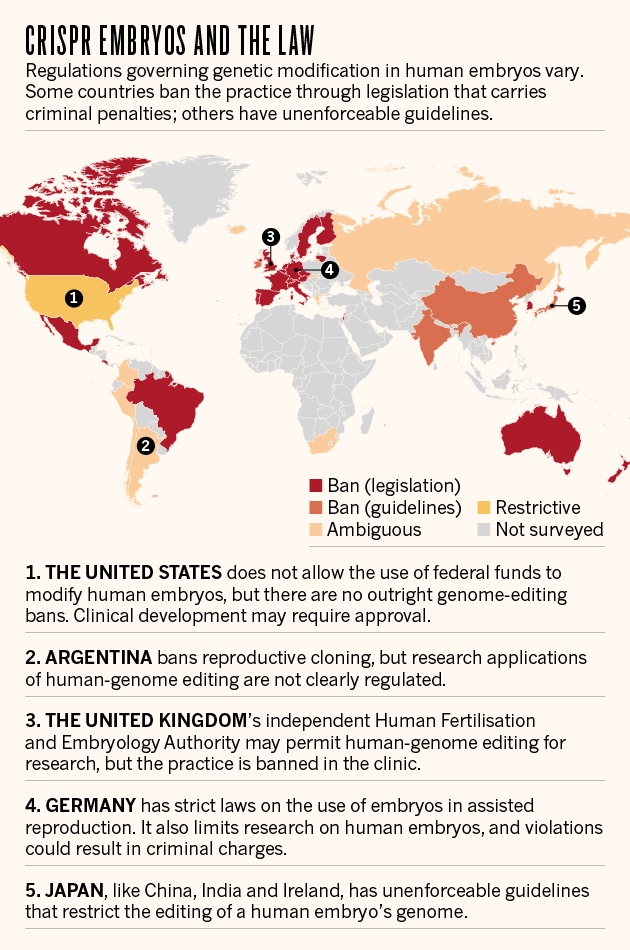
Using the back-casting method to back our research into our future scenario. Looking at how genetic modification exists today and how it could progress in the future:

“Newly fertilized eggs before gene editing, left, and embryos after gene editing and a few rounds of cell division. A study published on Wednesday announced that edited human embryos can repair common and serious disease-causing gene mutations.”

NYTimes article

Scientists in the USA have successfully used genetic modification to alter genes in human embryos. The clinical research was a huge achievement for modern day science and marks a major milestone as the scientists were able to repair the probability of disease-causing mutation.


Is Genetic Modification the Future?

By Samantha Klein

Genetic modification (GM) according to the Cambridge dictionary is: “the process of changing the structure of the genes of a living thing in order to make it healthier, stronger, or more useful to humans”. 

GM or genetic engineering offers a Future of endless opportunities as scientists have developed a means to use genetic information to recreate organisms. After thousands of years of natural evolution, humankind is now on the brink of being able to take active control over our own evolutionary process. Right now, genetic engineering is already practiced and it’s only a matter of time till it becomes mainstream.

“Just because we can do something, doesn’t mean we should do something” (IVY MAGAZINE, 2017) says biotechnology expert Jaime Metzl. Metzl discusses the very real dangers of this scientific phenomena. He states that humankind do not fully understand the consequences this technology poses, “genetic diversity and mutation have a lot of negative consequences, but they are also our species’ insurance policy against unforeseeable changes in the future” (IVY MAGAZINE, 2017).

For more information: https://jamiemetzl.com/speaking/

References:

Cambridge Dictionary 2018, Cambridge Publishing, viewed 16 August 2018, <https://dictionary.cambridge.org/dictionary/english/genetic-modification&gt;

MAGAZINE, IVY 2017, IVY MAGAZINE: Genetic Engineering & The Future,  IVY MAGAZINE, <http://magazine.ivy.com/2017/03/genetic-engineering-jamie-metzl/&gt; viewed 16 August 2018